



Outdoor lighting does more than make your home look good; it improves safety, deters intruders, and extends the usability of outdoor spaces. Whether you’re redesigning your landscape or simply want to highlight your favorite tree, there’s an outdoor lighting approach for every goal.
Path & walkway lighting
Path lighting lines your driveway, sidewalk, or garden path and guides guests safely to your door. According to Lee Company, LED pathway lights spaced about 6–8 feet apart create an inviting look without overwhelming brightness. Solar path lights are a convenient option for remote areas, but low‑voltage wired lights tend to be brighter and more reliable, especially in wooded West Virginia yards where sunlight is limited. Use lights with a downward shield to reduce glare and protect dark skies.
Uplighting trees and architecture
Uplighting uses ground‑based spotlights angled upward to highlight tall trees, stone facades, or architectural columns. Narrow beams work for thin trunks or columns, while wider beams suit broad surfaces. Hide fixtures behind shrubs or mulch to maintain a clean look. In rural West Virginia, uplighting a single mature oak can create a focal point and add depth to your landscape.
Downlighting (moonlighting)
Downlighting, or moonlighting, involves mounting lights high in trees or on structures to cast a soft, dappled glow. It mimics natural moonlight, making patios and decks feel magical. Use soft white LEDs for a natural effect. Downlights are also great for illuminating driveways or outdoor seating areas without harsh shadows.
Deck, step, and hardscape lighting

Properly lighting stairs, retaining walls, and patios improves safety and adds ambiance. Small LED fixtures installed under stair treads or along seating edges help prevent trips. Choose warm color temperatures to create an inviting atmosphere. Consider integrated lighting in stone walls or benches to highlight textures without cluttering the space with visible fixtures.
String & bistro lights
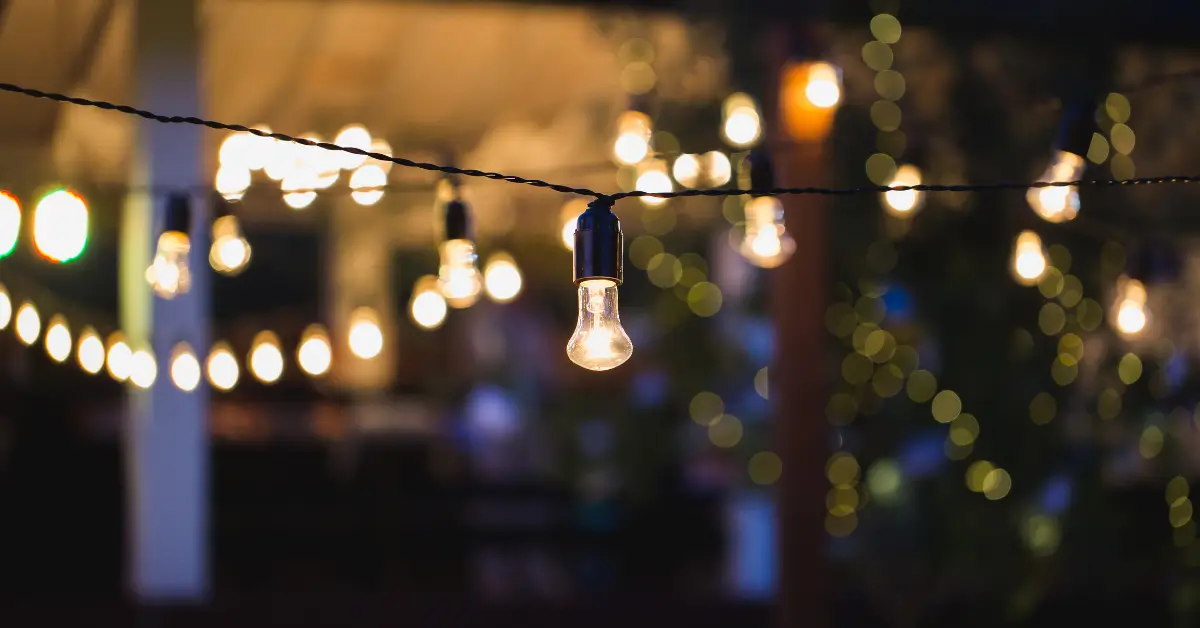
String lights (bistro lights) bring a festive, cozy feel to outdoor spaces. They’re ideal for patios, pergolas, and between trees. When installing string lights, use weatherproof cords and shatter‑resistant bulbs. Anchor them to sturdy structures and ensure they’re on a GFCI‑protected circuit. You can connect string lights to smart plugs or timers for automatic control.
Water feature & garden bed lighting
Highlight ponds, fountains, or lush flower beds with soft lighting. Submersible LED lights can be placed in fountains or ponds, while staked fixtures angled downward can wash light across garden beds. Aim lights to avoid glare and use warm tones to enhance natural colors. In West Virginia’s humid climate, choose fixtures with high IP (ingress protection) ratings to withstand moisture.
Smart & solar options
Smart lighting allows you to control brightness, color, and schedules from your phone. Solar lights charge during the day and light up automatically at night. While solar fixtures are eco‑friendly, they may be dimmer in shaded areas. A hybrid system—wired lights for primary pathways and solar for accent areas—works well in many landscapes.
Planning and installation tips
Before buying fixtures, sketch your yard and mark areas to illuminate. Layer your lighting: start with ambient light (path and flood lights), then add accent lights (uplights, downlights) to highlight features. Keep fixtures consistent in style and color temperature for a cohesive look. Always plan for safe wiring: bury low‑voltage cables at least six inches underground and use waterproof connectors. Hire a licensed electrician for complex installations, especially if connecting to existing circuits or installing new transformers. West Virginia’s terrain can be rocky; a professional will know how to route wiring safely.
Local considerations
West Virginia’s mountainous terrain and dark, starry skies make light pollution a concern. Use shielded fixtures and warm color temperatures (3000 K or lower) to protect views of the night sky. Weather‑resistant fixtures are essential to withstand rain, humidity, and winter freeze‑thaw cycles. In areas prone to flooding, choose fixtures rated for wet locations and ensure transformers are elevated.
Conclusion and call‑to‑action
Thoughtful outdoor lighting enhances curb appeal, improves safety, and lets you enjoy your yard after sunset. By using a mix of path lights, uplights, downlights, and specialty fixtures, you can create layers of light that highlight your home’s best features. For professional design and installation that meets West Virginia codes, contact First Response Electrical. Our experts will help you choose durable, energy‑efficient fixtures and install them safely. Light up your nights—call us today.